



Rising Damp

How could it occur and why does it happen?
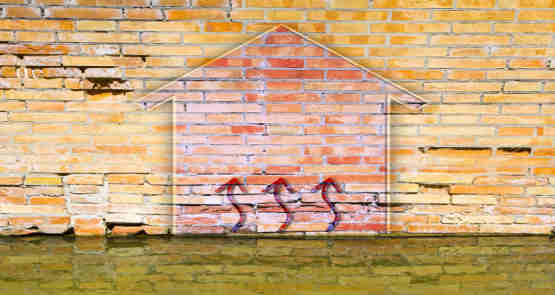
Rising damp in a domestic property occurs when water from the ground ascends through the walls or floors of a building by capillary action. Potential reasons could be as follows:
Absence or Failure of a Damp-Proof Course (DPC)
Modern buildings are typically constructed with a damp-proof course, a barrier designed to prevent moisture from rising up through the walls. Rising damp can occur if the DPC is absent, damaged, or was never installed. In older buildings, the DPC, which might be made of slate, bitumen, or plastic, can fail over time due to deterioration.
Bridging of the Damp-Proof Course
The effectiveness of a DPC can be compromised if it is "bridged" or bypassed. This can happen if the soil or debris outside is piled up above the level of the DPC, or if internal renovations, such as new concrete floors, connect the ground directly to the wall above the DPC level.
Capillary Action in Porous Building Materials
Building materials like brick, stone, and mortar are porous and can act like a wick, drawing moisture up from the ground through capillary action. The height to which the moisture will rise is generally limited to a meter or so above ground level but can vary based on the porosity of the materials and the rate of evaporation from the wall surface.
High Ground Water Levels
Properties built in areas with high ground water levels or poor drainage are more susceptible to rising damp due to the greater availability of water to be absorbed into the foundations and walls.
Lack of Ventilation
Poor ventilation can exacerbate the effects of rising damp by reducing the rate at which moisture evaporates from the walls. Good air circulation is essential for drying out damp areas.
Hygroscopic Salts
The process of rising damp can also deposit hygroscopic salts (such as nitrates and chlorides) from the ground water into the walls. These salts can attract moisture from the air, contributing to the problem of dampness even after the original source of rising damp has been addressed.